Blog and News Updates
Check back often for updates!
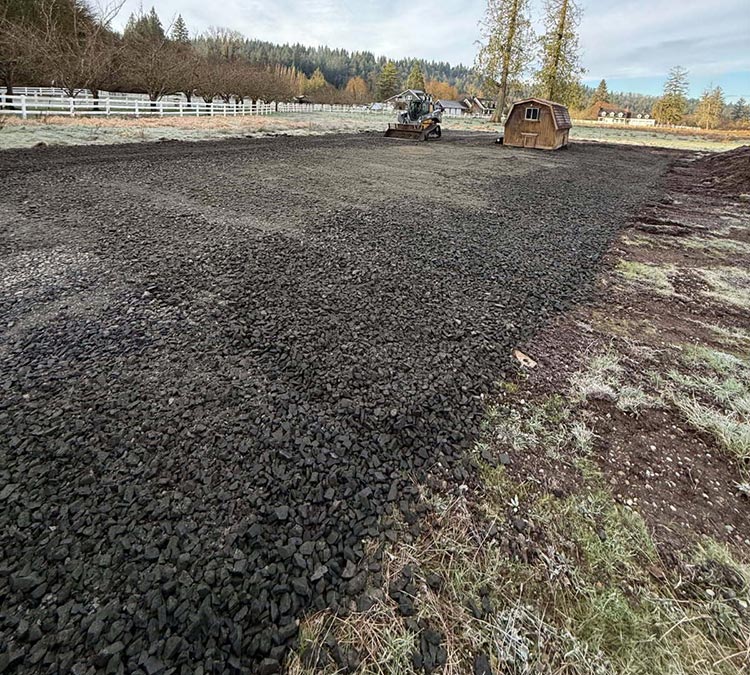
Living in a high-rainfall climate like the Pacific Northwest has its charms—lush greenery and cozy afternoons—but it also has a dark side: the backyard swamp.
If you’ve stepped out your back door only to find your turf uneven, your lawn saturated, and your boots caked in thick, grey mud, you aren't alone. For many homeowners, the "rainy season" means an entire section of their property becomes a "no-go zone." Standing water isn't just an eyesore; it’s a threat to your home’s foundation, a breeding ground for mosquitoes, and a guaranteed way to ruin your interior flooring as pets and kids track the outdoors back in.
But what if you could reclaim that land? By combining professional yard grading with the strategic installation of natural gravel, you can transform a soggy mess into a high-functioning, durable outdoor space.
1. Understanding the Enemy: Why Your Yard Stays Wet
Before you dump a truckload of stone, you have to understand why the water is pooling in the first place. Most drainage issues stem from three primary causes:
2. The Foundation of a Dry Yard: Leveling and Grading
You cannot fix a mud problem with gravel alone. If you put gravel over a hole, you will eventually just have a hole full of wet gravel.
The 2% Rule
Professional yard leveling (or regrading) is the process of reshaping the land. The gold standard for residential drainage is a 2% to 4% slope. This means for every 10 feet of distance, the ground should drop about 2 to 5 inches. This subtle decline is often invisible to the naked eye but is the difference between a dry walkway and a seasonal pond.
French Drains: The Invisible Hero
In areas where grading alone isn't enough, we look to subsurface solutions. A French Drain is essentially a buried gutter. It consists of a trench filled with perforated pipe and surrounded by gravel and geotextile fabric. When water saturates the soil, it seeks the path of least resistance—the pipe—which then carries the water safely away to a discharge point or a dry well.
3. Selecting Your Surface: Not All Gravel is Created Equal
Once the ground is level and the drainage is set, it’s time to choose your material. This is where many homeowners make mistakes, choosing "pretty" stones that shift underfoot or "fine" stones that turn into a slurry.
#57 Crushed Stone: The Utility King
If you are building a parking pad for "toys"—your RV, boat, trailer, or ATV—this is your best friend. Because the edges are angular and sharp, they "lock" together under pressure. Unlike smooth stones, crushed stone won't shift when you drive a heavy vehicle over it.
Pea Gravel: The Foot-Friendly Choice
For walkways leading to the shed or around a fire pit, pea gravel is the go-to. These stones are small, rounded, and smooth. While they don't "lock," they offer excellent drainage and a high-end aesthetic. Pro-tip: Use a stabilizer grid (like a plastic honeycomb) if you want pea gravel that doesn't feel like walking through deep sand.
River Rock: For High-Volume Runoff
If you have a "river" that forms in your yard every time it pours, don't fight it—style it. A dry creek bed made of larger river rocks can handle massive amounts of water moving at high speeds without eroding your soil.
4. The Step-by-Step Transformation Process
To ensure your new gravel area doesn't disappear into the mud within six months, you must follow a specific installation process:
5. The Lifestyle Benefits: More Than Just a Dry Yard
The transformation is more than just technical—it's emotional.
"Toy" Storage and Protection
An RV or boat sitting on wet turf is a recipe for disaster. Moisture rising from the ground can cause undercarriage rust, and the weight of the vehicle will eventually create deep ruts that ruin your property's value. A level, graveled parking pad protects your investment and makes hitching up for your next adventure a 5-minute task rather than a 2-hour struggle.
Access to the "Outposts"
Do you have a garden shed, a woodpile, or a detached garage? In a rainy climate, these often become islands. By installing a proper gravel path, you create a 365-day-a-year connection. No more checking the weather before you go grab a tool or more firewood.
Curb Appeal and Property Value
A yard full of mud looks neglected. A yard with crisp gravel lines, defined borders, and intentional drainage looks engineered. Prospective buyers see a yard that handles water well as a sign of a well-maintained home.
6. Maintenance: Keeping Your Gravel Pristine
Gravel isn't "zero" maintenance, but it’s "low" maintenance. To keep it looking new:
Stop Dreaming, Start Building
You don't have to be a prisoner to the weather. Living in a rainy climate shouldn't mean sacrificing half of your property to the mud. By investing in professional leveling and high-quality natural gravel, you turn a liability into an asset.
Imagine waking up after a night of heavy rain, looking out your window, and seeing a perfectly dry, level area where your boat is parked. Imagine walking to your shed in your slippers because you know the path is clean and solid.
Are you ready to stop battling the mud and start enjoying your yard again?